
Thursday, October 11, 2018

Wednesday, October 10, 2018
Toys that Teach
This article is copied from http://preschoolexpress.com/learning-station07/toys-that-teach-dec07.shtml. As we get closer to Christmas, you may be wondering what you can get your child that will help with development. Here are some things to think about!
Your child already has the most important toy he or she could want or need – YOU!
Other toys, however, can be very important for helping your child to learn through play.
Here are some things to consider when considering toys for your children.
Other toys, however, can be very important for helping your child to learn through play.
Here are some things to consider when considering toys for your children.
IS THE TOY SAFE? Is it sturdy, with no small pieces to break off? Will it become a dangerous toy in the wrong hands?
WILL THE TOY LAST? We often buy disappointment for children when we give them toys that will break in a couple of days. All around them, children see that they live in a throw-away world. Let’s give them some things that will last and upon which they can depend.
DOES THE TOY MEET A DEVELOPMENTAL NEED?
PHYSICAL DEVELOPMENT-- Toys can aid in the physical development of children by encouraging coordination and the use of both large and small muscles. Toy suggestions: balls, toys that fit together, button books; toys to push, pull or climb upon.
MENTAL DEVEOPMENT -- Toys can aid in the mental development of children by encouraging reasoning, problem-solving and creative thinking. Toy suggestions: puzzles; games; blocks.
LANGUAGE DEVELOPMENT – Toys can aid in the language development of children by helping them learn new words, and word sounds, and sentence structure.
Toy suggestions: Books, video’s, alphabet toys.
SOCIAL (& IMAGINATION) DEVELOPMENT - Toys can aid in the social development of children, by giving them opportunities to understand how others feel and act. Toy suggestions: Dress –up clothes; puppets, tea sets, doll houses.
CREATIVITY DEVELOPMENT – Toys can aid in helping your child learn creative expression and to become problem solvers. Toy suggestions: Open-ended art materials, play dough, dance costumes, musical instruments, blocks.
DISCOVERY (CURIOSITY) DEVELOPMENT – Toys can lead to discovery and foster experimentation. Toy suggestions: Magnets, magnifying glasses, color viewers, toys for playing in water, mud or sand.
IS THE TOY APPROPRIATE FOR THE AGE OF THE CHILD?
THE INFANT (0-1) is busy learning about himself, his body control and the use of his senses. He responds to touch, sounds and smells. Toys can provide an infant with the stimuli for motor and sensory development. An infant needs safe, simple toys that he can master, toys that are easy to hold onto and toys that can be touched, felt and watched. Toy suggestions: mobiles, rattles, teethers, squeeze toys, musical toys, baby mirrors, water toys, washable stuffed animals and dolls.
THE INFANT (0-1) is busy learning about himself, his body control and the use of his senses. He responds to touch, sounds and smells. Toys can provide an infant with the stimuli for motor and sensory development. An infant needs safe, simple toys that he can master, toys that are easy to hold onto and toys that can be touched, felt and watched. Toy suggestions: mobiles, rattles, teethers, squeeze toys, musical toys, baby mirrors, water toys, washable stuffed animals and dolls.
THE TODDLER (1-2) has learned about herself and now feels confident in learning about the world. She is especially interested in learning how to control other people. The toddler recognizes the existence of others but is still self-centered. She generally plays alone, even when surrounded by others. The toddler is busy developing large muscle control and learning to imitate the sounds and actions of others. She is very adventurous and needs toys that can be safely pushed, pulled, climbed on and taken in and out. Toy suggestions: wooden blocks, sand box with scoops, small cars, trucks and people, large durable trucks to push, water toys, simple dress-up toys, such as hats and scarves, ball, hardcover books, simple wind-up toys, beginning puzzles, stuffed animals and dolls.
A PRE-THREE (2-3) is concerned with self-expression and the beginnings of socialization. Toys suggestions: any of the toys mentioned above, plus small riding toys (not a trike), table top easel, creative materials, such as paper, crayons and marking pens, play dough, rhythm instruments, tapes, puzzles, simple storybooks, play phones, a small wagon.
A PRESCHOOLER (3-5) is still experimenting with the senses, coordination and self-expression, but now he has more social awareness of others. Toy suggestions: any of the previously mentioned toys, plus tricycles, large blocks, balance beams, flannelboards, magnetic boards, pencils, paint, scissors, paste, collage materials, pounding toys, real tools, nuts and bolts, puppets and a puppet stage, dolls and doll houses, play centers, sewing cards, puzzles, learning games, magnets, magnifying glasses, storybooks.
DOES THE TOY HELP THE CHILD LEARN TO REASON? In looking for toys that help children learn to reason, keep in mind that there are four different kinds of toys for this purpose. Examine your child’s toys and see that she has at least one toy that fits into each of the four categories below. Children need a balance of toys from which to learn different skills.
COORDINATION TOYS – are designed to incorporate practice for a motor task that may be difficult for a child. They enable a child to become self-sufficient in their day-to-day environment. Examples: sewing cards, button frames, interlocking blocks, balls, putting pegs in holes.
CONSTRUCTION TOYS - are designed so that the end product is deliberately left undetermined by the materials being used. Example: Blocks and shapes.
RECONSTRUCTION TOYS – are self-correcting materials that can be taken apart and reassembled. These have degrees of difficulties. Examples: stacking toys, puzzles.
CLASSIFICATION TOYS – are materials that require matching, patterning and grouping. They include most games. Examples: lotto, dominoes, beads, board games, etc.
IN CONCLUSION – Children learn through play and the use of a variety of toys. But as I stated at the beginning, nothing can replace interaction with adults, especially parents.
Monday, September 24, 2018

Friday, September 21, 2018
Have You Participated In A NICU Graduation?
Many of the families involved in Davis Early Intervention have had the opportunity to participate in a NICU Graduation of some sort. Here is an article about one family in Utah.
https://kutv.com/features/health/baby-your-baby/baby-your-baby-nicu-graduation-celebrates-babies-families
https://kutv.com/features/health/baby-your-baby/baby-your-baby-nicu-graduation-celebrates-babies-families
Friday, August 31, 2018
CDC Developmental Milestones Available in English and Spanish
Here is a great resource for families trying to determine what milestones they should be working on with their little one. You can watch videos, complete a milestone checklist or even download a milestone tracker app.
The Learn the
Signs, Act Early website from the CDC (https://www.cdc.gov/ncbddd/actearly/)
has an amazing array of free resources for families and professionals. A new
feature is the Spanish
version of The
Milestones in Action library. This resource was created to help
parents, early care and education providers, and healthcare professionals to
identify developmental milestones in very young children (2 months to 5 years)
and areas of concern through photos and videos. No permissions are needed to
use the photos and images in this library for educational or awareness-building
purposes.
Monday, August 13, 2018
Benefit of Play
Play is a child's job. Help them do their job well by understanding the benefits of play and guiding your child to play that will help them develop skills in all areas. Here is a resource that talks about the benefits of play to development in the areas of physical, emotional, social, cognitive, creative and communication.
http://www.thegeniusofplay.org/tgop/benefits/genius/benefits-of-play/benefits-of-play-home.aspx?hkey=75c664db-cb16-4004-8756-03ba00ba381e

http://www.thegeniusofplay.org/tgop/benefits/genius/benefits-of-play/benefits-of-play-home.aspx?hkey=75c664db-cb16-4004-8756-03ba00ba381e
Monday, August 6, 2018
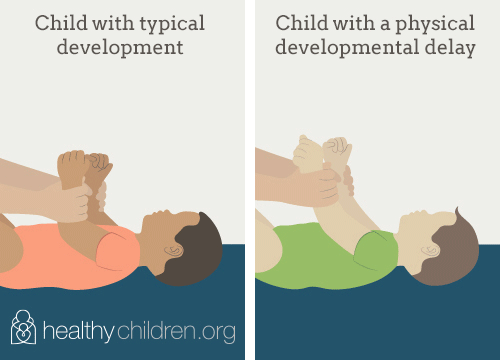
Physical Development Delay: What to Look For
Do you have concerns that your child isn't moving like other kiddos his or her age? Or maybe your older children were progressing faster than the little one?
Googling for information can lead to such a large amount and variety of age appropriate skills that it can be overwhelming. Here is a link to access information and help you gather the information you need to start a conversation with your pediatrician.
https://www.healthychildren.org/English/MotorDelay/Pages/default.aspx
There is also a list of age appropriate activities to look for.
You can also talk to your service provider from Davis Early Intervention if you have questions.
Googling for information can lead to such a large amount and variety of age appropriate skills that it can be overwhelming. Here is a link to access information and help you gather the information you need to start a conversation with your pediatrician.
https://www.healthychildren.org/English/MotorDelay/Pages/default.aspx
There is also a list of age appropriate activities to look for.
You can also talk to your service provider from Davis Early Intervention if you have questions.
Subscribe to:
Posts (Atom)