Friday, August 31, 2018

CDC Developmental Milestones Available in English and Spanish


Here is a great resource for families trying to determine what milestones they should be working on with their little one.  You can watch videos, complete a milestone checklist or even download a milestone tracker app.  

The Learn the Signs, Act Early website from the CDC (https://www.cdc.gov/ncbddd/actearly/) has an amazing array of free resources for families and professionals. A new feature is the Spanish version of The Milestones in Action library. This resource was created to help parents, early care and education providers, and healthcare professionals to identify developmental milestones in very young children (2 months to 5 years) and areas of concern through photos and videos. No permissions are needed to use the photos and images in this library for educational or awareness-building purposes.

Milestones in Action button


Monday, August 13, 2018

Benefit of Play

Play is a child's job.  Help them do their job well by understanding the benefits of play and guiding your child to play that will help them develop skills in all areas.  Here is a resource that talks about the benefits of play to development in the areas of physical, emotional, social, cognitive, creative and communication.
http://www.thegeniusofplay.org/tgop/benefits/genius/benefits-of-play/benefits-of-play-home.aspx?hkey=75c664db-cb16-4004-8756-03ba00ba381e


Monday, August 6, 2018

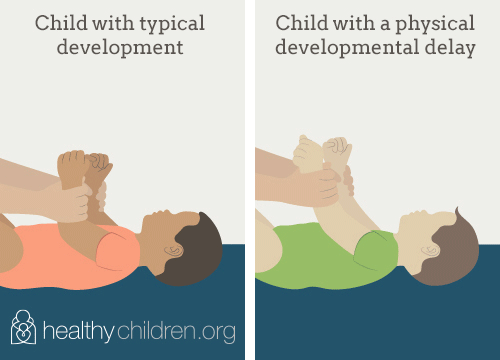
Physical Development Delay: What to Look For

Do you have concerns that your child isn't moving like other kiddos his or her age?  Or maybe your older children were progressing faster than the little one?

Googling for information can lead to such a large amount and variety of age appropriate skills that it can be overwhelming.  Here is a link to access information and help you gather the information you need to start a conversation with your pediatrician.
https://www.healthychildren.org/English/MotorDelay/Pages/default.aspx

There is also a list of age appropriate activities to look for.
Hold head up animation

You can also talk to your service provider from Davis Early Intervention if you have questions.

Monday, July 9, 2018

Davis Early Intervention Has a Facebook Group

We have recently started a Facebook Group with the hopes that families will be comfortable asking questions, sharing successes and communicating with Davis Early Intervention staff and other families via the Davis Early Intervention Facebook Group.  Please share your concerns, questions and suggestions.  We ask that you be respectful of each other.

Since we are new to this Facebook Group resource, please be patient with us and we figure out what we are doing!  We really want this to be an additional resource for our families, so teach us by asking your questions and sharing your comments.  We want parents to be able to communicate with each other, so feel free to answer questions and share experiences.

Our Davis Early Intervention Facebook Group is a closed group so anyone can see the group and request to join by searching in Groups or by clicking on this link: https://www.facebook.com/groups/228505264544916/.  However, only current members of the group will be able to see posts.  In order to make this successful, we need and want everyone to be involved!

We also want to say Thank You for sharing your little ones with us and letting us enjoy your family struggles and successes along with you.

We love our Davis Early Intervention Families and want to do all we can to provide support for you!

Tuesday, June 26, 2018

Parenting

I was listening to the radio yesterday and during the Dave and Dujenevik show on KSL I heard Dave talk about a study on Helicopter parenting.  He said that kids as young as 2 years old who have parents who hover, make all the decisions and fix all the problems grow up to be less able to self-regulate or learn from their mistakes or build lasting relationships.  The push in Utah is to move toward more "free-range parenting".  What happened to the happy medium?

When I was growing up, I knew I had boundaries but I could choose my activities, my friends, and my mistakes within those boundaries.  I knew my parents would be there to guide and support but they would not dictate.  My parents knew where I was and I knew when I heard either of them whistle it was time to go home.  (I could hear that whistle from blocks away - and I always knew when it was my parents).

So what are some strategies to find that happy medium in parenting?  Try some of these ideas:

  • Give your child choices.  Let them learn that they can decide.  Start with simple things like what shirt they want to wear, which snack to eat, or what outside activity to do today.  Make sure the choices you give are all acceptable to you and don't overwhelm with too many options.  For a two year old, start with a choice between two items and gradually increase to three or four.  The best way to teach a little one to make good choices is to stand by what they say.  If they choose the green shirt, they wear the green shirt, even if the blue one is their favorite.  Tell them they can choose the blue one tomorrow if they want to.
  • Allow your child limited freedom.  Can you keep an eye on them from the kitchen window?  Then let them play in the backyard on their own or with a friend.  Don't provide all the latest and greatest toys for them, let them use their imaginations.  My little grandsons love to throw sticks at the "dinosaurs".  
  • Encourage your kids to have a growth mindset.  Teach them that if they make a mistake, they can learn from it, not fail because of it.  They can build on what they have learned to become successful in their endeavors.  Everyone makes mistakes, but those who don't see it as a failure, but as an opportunity to learn are the most successful in life.  Here is a link to a growth mindset resource that has great information for helping your child build a growth mindset:  https://biglifejournal.com/blogs/blog
Have fun parenting.  It shouldn't be a horrible experience for anyone.  I know it's tough sometimes, but as you give your child some opportunities to make their own choices and their own mistakes, they will grow to be amazing little humans.  Just the way you want them to be.

Image result for outdoor imagination

Monday, June 11, 2018

Seeing Children do More with Less

How do children learn to play?  Are we offering toys too early and not letting little ones develop the abilities to self-regulate or develop creativity?  Here is an interesting read explaining the benefits of not introducing toys too early.


Imagine not offering babies any toys until they find their hands for play,” writes Deb Curtis in this fascinating article. Read on to learn about an approach used by the Pikler Institute in Hungary, where they have documented over 75 ways that babies learn to use their hands for play. If you want to learn about alternatives to toys that beep, rattle, and flash, read on at http://www.communityplaythings.com/resources/articles/2018/seeing-children-do-more-with-less Thanks to Community Playthings for making this article available!

Tuesday, June 5, 2018

How Parents Can Teach Perseverance

ORLANDO, Fla. (Ivanhoe Newswire) — Use positive words, celebrate success, encourage kids to try new things—parents can say and do so many things to instill perseverance in their kids. But a new study from the Massachusetts Institute of Technology (MIT) suggests that one of the most effective ways parents can teach persistence is to allow children to watch others being persistent.
Perseverance is necessary for discovering new ideas. It enables us to take risks, and learn from failures and then try again. Research even suggests that it’s a valuable skill for babies, since it may help academically later in life. But how can parents teach this trait to their kids?
Developmental psychologists at MIT recruited 102 babies between the ages of 13 and 18 months. As babies watched, researchers tried to retrieve a toy from a container and detach a key chain from a carabiner. In front of some babies, they completed the task easily and quickly, while they struggled to complete the tasks in front of other babies. Then, all the babies were given a toy with a button that didn’t work. The babies who had seen the researchers struggling with their own objects pushed the button twice as many times as those who had seen the researchers succeed effortlessly. So, key lesson: If adults don’t quit, it may help their kids build grit.
The researchers performed the experiment again on 80 babies and got the exact same results, suggesting that babies are keen observers and can learn even persistence by watching other people.
Contributors to this news report include: Cyndy McGrath, Supervising Producer; Milvionne Chery, Producer; Roque Correa, Editor.
Produced by Child Trends News Service in partnership with Ivanhoe Broadcast News and funded by a grant from the National Science Foundation.